
Selecting the most appropriate drone academy is essential for those who wish to build up their career. It is also important for anyone pursuing a professional activity related to unmanned aerial systems.
A Drone Pilot Training School should include basic flying skills. Moreover, it should also cover flight safety, airspace, regulations, equipment, flight planning, and emergency handling.
Prior to enrollment, candidates should compare the institute’s regulatory status and instructors. They should also review facilities, course syllabus, and practical training programs.
Firstly, begin with DGCA authorization and training program description.
If you plan to enroll in Drone Pilot Training School, verify your provider is authorized by the DGCA.
Moreover, DGCA curricula include topics such as drone regulations, flight principles, airspace, meteorology, risk assessment, maintenance, and emergency handling.
Check the latest requirements and the training type before registration.
A drone school should tell you about the training program. Make sure you know if there are any classroom lessons, simulator practice, flying practice, equipment handling practice and flight planning in the course.
Additionally, give Practical Flying the right importance.
Practical flying is important in the process of mastering the art of drone flying.
Using simulation training will enable learners to familiarize themselves with basic techniques.
Additionally, it helps them handle various situations in a controlled manner before flying out in the open.
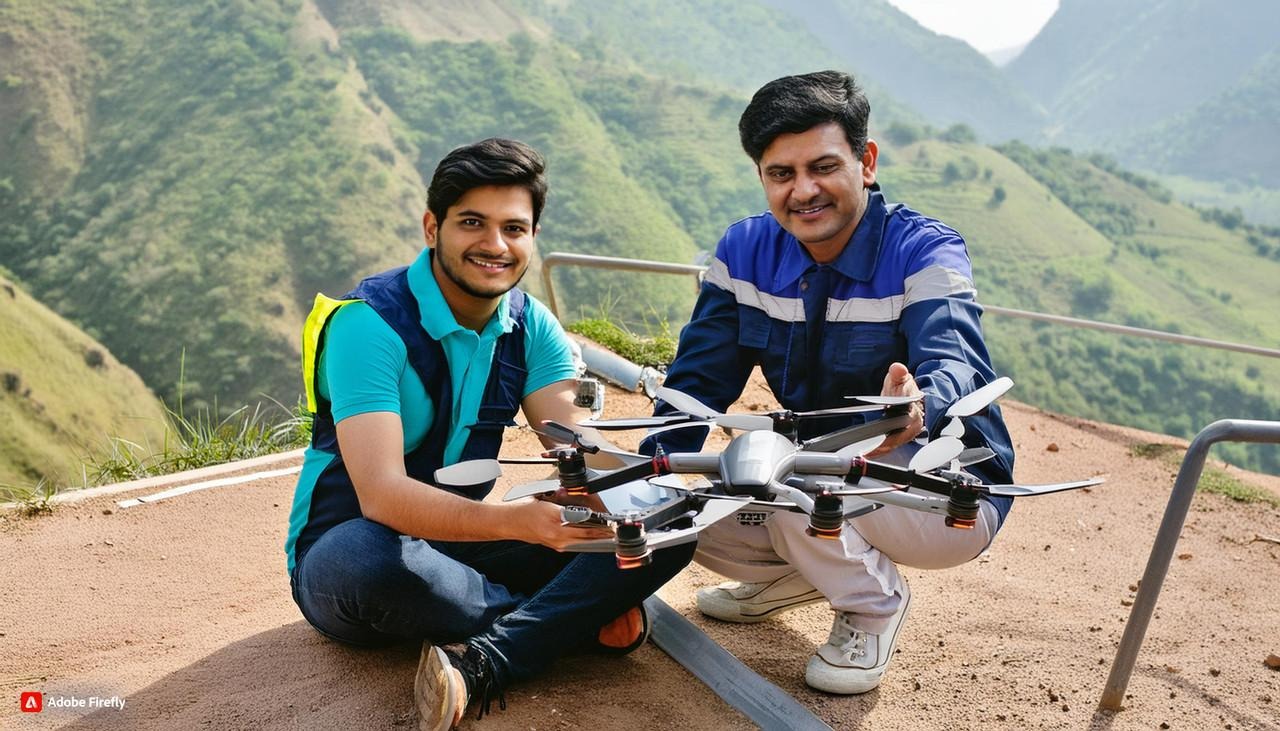
Through practical training, students will master techniques such as take off and hovering.
Additionally, they will practice turning, landing, navigation, and handling unexpected situations.
The training should also focus on safe flying techniques.
Additionally, focus on specialized skills.
The applications of drones include land surveying, agriculture, infrastructure surveying, mapping, photography, and disaster management.
If you have a specific field in mind, check whether the institution offers training in this area. Additionally, a Drone Pilot Training School can provide targeted programs.
Training Focus at FlapOne Aviation
For instance, FlapOne Aviation specializes in training.
Additionally, it focuses on drone pilot training, drone instructor training, repair and maintenance, FPV flying, and drone survey and mapping.
If you want training in special flying, FPV training offered by FlapOne Aviation includes flight modes such as Angle. Additionally, Horizon and Acro are also available.
Additionally, inspect training facilities.
Before joining, examine the training grounds, simulation facilities, drones, labs and other training equipment.
Consider the credentials of the instructors too.
A program where you get to use relevant equipment and undertake practical sessions is a valuable experience.
Additionally, it is more valuable than theoretical classes.
FAQs
Additionally, what do I need to inspect before joining a drone school?
Additionally, you have to check its current DGCA certification, curriculum, admission criteria, instructors, equipment and facilities for practical training.
Additionally, is simulator training helpful?
Yes. It enables trainees to practice with the controls and procedures before undertaking actual flights.
Can drone training cover mapping and GIS?
Yes. Additionally, there are specialized training schools which offer training on drone surveying, GIS data and mapping among others.
To begin, select the right training for you.
A good drone school will depend upon your own needs and experience, along with where you want to fly drones.
Additionally, consider aspects such as training practice, curriculum, legality, and facilities. Do not choose training based only on cost or timeframe.
For those looking to train as professional drone pilots, consider FlapOne’s courses.
Additionally, they might be worth checking out.